
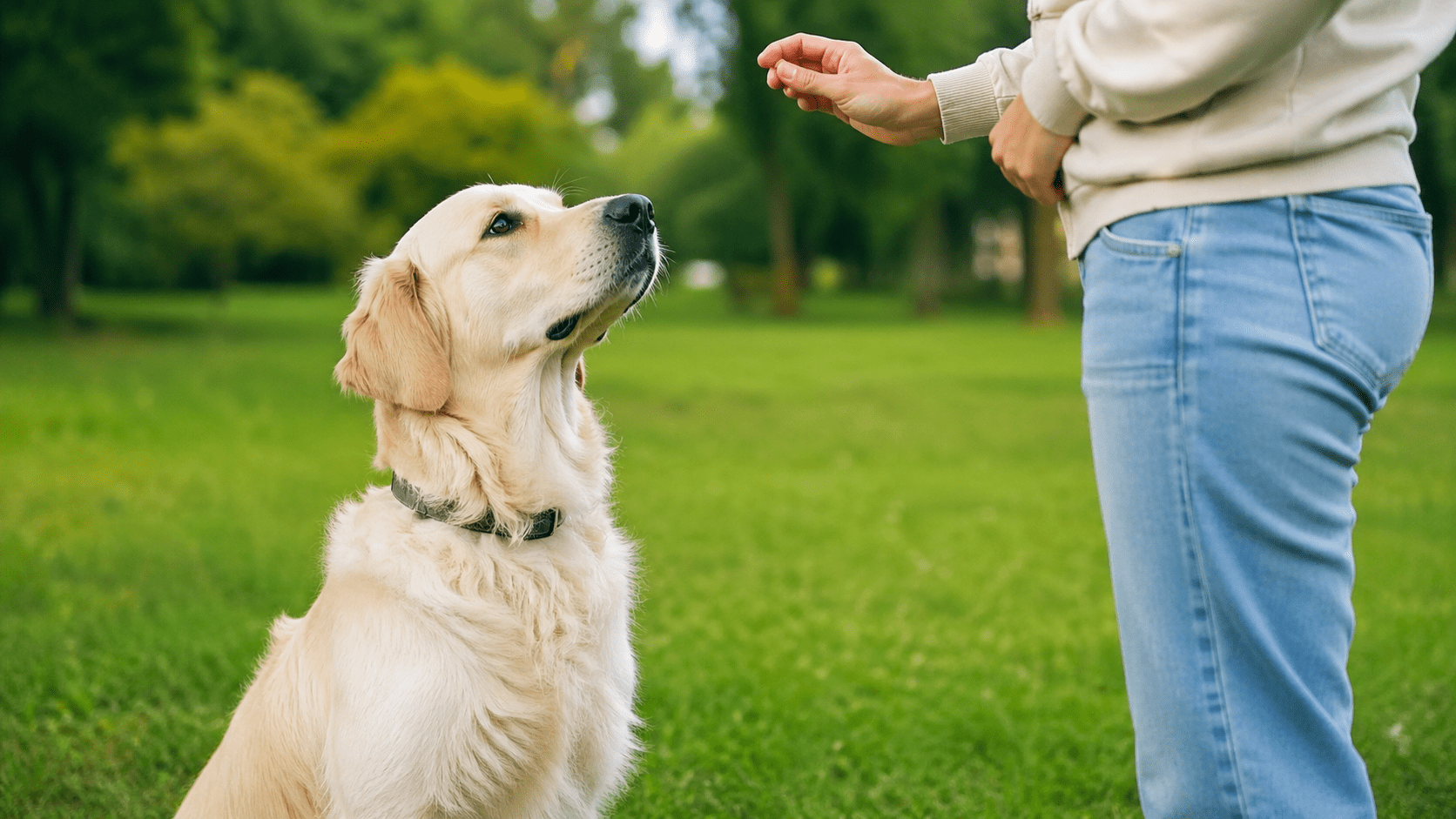

One dog training means helping your dog learn clear, useful behaviours in a calm and kind way. It is not about control, fear or forcing your dog to obey. Good training helps your dog understand what you want and makes daily life easier for both of you.
Many owners start training because of one simple problem: pulling on the lead, jumping up, not coming back, barking for attention or ignoring basic cues. These are normal training challenges. With patience, rewards and clear routines, many dogs can learn better habits.
Quick answer:
- Use reward-based training, not punishment.
- Keep lessons short, calm and simple.
- Reward the behaviour you want to see again.
- Ask a qualified trainer or behaviourist if the problem is serious, unsafe or linked to fear.
What one dog training really means
One dog training is best understood as training the dog in front of you. Your dog has their own personality, history, energy level, fears and favourite rewards. A method that works quickly for one dog may need more time with another.
The RSPCA explains that dog training should be reward-based. This means giving your dog something they like, such as food, toys or praise, when they show a behaviour you want. This makes the dog more likely to repeat that behaviour.
This approach is also supported by Dogs Trust, which describes positive reinforcement as teaching your dog that good things happen when they make a good choice.
For example, if your dog sits calmly before the lead goes on, you can reward that calm sit. Over time, your dog learns that calm behaviour helps good things happen. This is much clearer and safer than shouting, pulling or using fear.
Why reward-based training works
Dogs repeat behaviours that bring them something useful. That useful thing may be food, attention, play, access to a walk or a favourite toy. Training works better when you use this simple idea in a fair way.
The PDSA advises owners to find out what their dog really likes. Some dogs work well for small food treats. Others enjoy toys, praise or a short game. Timing also matters. The reward should come during the behaviour or very soon after it, so the dog can connect the action with the reward.
This does not mean giving treats forever for everything. At the start, rewards help your dog understand what you want. Later, you can reward in a more natural way, with praise, play, movement or occasional treats.
A simple example is teaching “sit”. You wait for the dog to sit, or guide them gently with a treat. As soon as their bottom touches the floor, you mark the moment with a word like “yes” and give the reward. After many calm repeats, the dog begins to understand the cue.
Simple one dog training steps to start at home
Start in a quiet place. Home is often easier than a park because there are fewer distractions. The Royal Kennel Club suggests that home can be a good training place because the environment is more controlled and the dog may feel relaxed.
Begin with one simple behaviour. Good first lessons include:
- responding to their name,
- sitting calmly,
- coming to you indoors,
- waiting before food,
- walking a few steps on a loose lead,
- settling on a mat.
Keep the session short. Five minutes of calm training is often better than a long lesson that becomes frustrating. Stop while your dog is still interested.
Use the same cue each time. If one person says “come”, another says “here” and another says “come on then”, the dog may become confused. Choose simple words and keep them consistent.
Reward small progress. If your dog usually jumps up, reward four paws on the floor. If your dog pulls on the lead, reward a few steps beside you. If your dog struggles to come back outside, practise indoors first.
How to make daily life part of training
Training does not only happen during formal lessons. Every walk, meal, door opening and greeting can teach your dog something.
If your dog sits calmly before the door opens, calm behaviour becomes useful. If your dog pulls and still reaches the park faster, pulling may become stronger. If your dog barks and gets attention every time, barking may become a habit.
Blue Cross explains that many dogs who pull on the lead have learned to do so over time, and that patience is needed when teaching loose lead walking. The dog needs to learn that pulling stops progress, while walking calmly allows the walk to continue.
This is why one dog training should be practical. You are not just teaching tricks. You are teaching your dog how to live safely and calmly with people.
Try this simple daily routine:
- Reward your dog for looking at you on walks.
- Reward calm behaviour before meals.
- Practise recall indoors before trying it outside.
- Reward your dog for settling while you drink coffee or answer the door.
- Use calm praise when your dog makes a good choice without being asked.
Small habits repeated often can make a big difference.
Common mistakes to avoid
One common mistake is expecting too much too soon. A dog may sit perfectly in the kitchen but struggle in a busy park. This does not mean the dog is stubborn. It often means the situation is too hard.
Another mistake is repeating the cue many times. If you say “sit, sit, sit, sit”, your dog may learn that the first word does not matter. Say the cue once, give your dog time, then make the task easier if needed.
Punishment can also create problems. Shouting, physical correction, choke chains, prong collars or electric collars can increase fear and stress. The RSPCA says it only recommends positive, reward-based training methods and advises against shouting or physical punishment in training contexts.
Do not train when you are angry. Dogs learn better when the lesson is clear and calm. If you feel frustrated, stop, take a break and return later with a simpler task.
When to get professional help
Some training problems are not just “bad manners”. Sudden behaviour changes, growling, snapping, biting, severe fear, panic when left alone or strong reactivity on walks may need professional support.
If your dog’s behaviour changes suddenly, speak to a vet first. Pain or illness can affect behaviour. Dogs Trust advises that if a dog’s behaviour is concerning or has changed, the first step is to speak to a vet, who can refer to a behaviourist if needed.
For training support in the UK, the Animal Behaviour and Training Council can help owners find registered trainers and behaviour professionals. The RSPCA also points owners towards ABTC-registered specialists for behaviour problems.
Ask for help early if you feel unsafe, worried or stuck. A qualified dog trainer or behaviourist can look at the full picture and create a plan that suits your dog, your home and your daily routine.
A calm way to build better behaviour
One dog training does not need to be complicated. Start with simple behaviours, use rewards your dog values and practise in quiet places before adding distractions.
Your dog does not need perfect obedience to be a good dog. They need clear guidance, safe routines and patient teaching. With kind, reward-based training, you can build better manners and a stronger bond one small step at a time.
